


30 Sep 2026 Update to Pediatric Respiratory Vaccine Guidelines (2026-2027)
Influenza Vaccine
- Annual influenza vaccination is recommended for all children starting at 6 months of age.
- All children aged <5 years are considered high risk for severe influenza, especially those <2 years old.
- Please refer to Table 2 in the resource below for other high-risk conditions.
- There is no preference for live versus inactivated influenza vaccine.
- Not all children can receive the live influenza vaccine; there are specific medical contraindications (refer to Table 5).
- Isolated egg allergy is not a contraindication to any formulation, including those manufactured in an egg-based process.
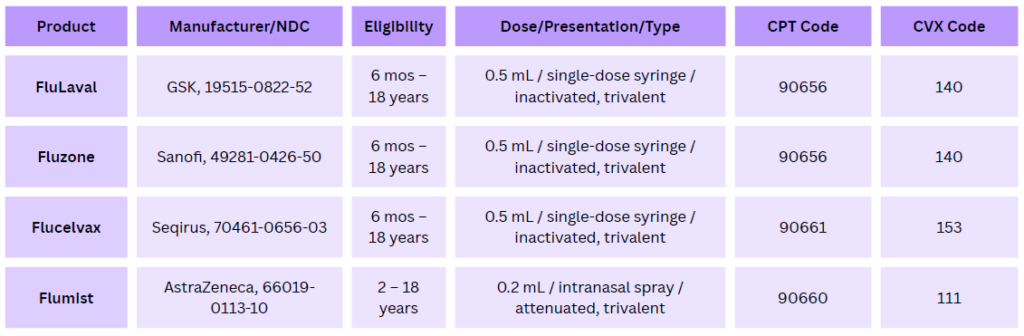
- For parents who prefer an egg-free option, Flucelvax is a cell-based vaccine.
- Children aged <9 years who have not received 2 lifetime doses prior to this season should receive 2 doses spaced 4 weeks apart this season.
The following influenza vaccine formulations are available for ordering through the Vaccines for Children (VFC) program:
COVID-19 Vaccine
COVID-19 vaccination is currently recommended for certain high-risk groups, which include:
- All children aged 6-23 months due to higher COVID-19-associated hospitalization rates
- Persons at high risk of severe COVID-19 due to immunocompromise or underlying medical conditions (refer to Table 1 in the resource)
- Residents of long-term care facilities or other congregate settings
- Persons whose household contacts are at high risk for severe COVID-19
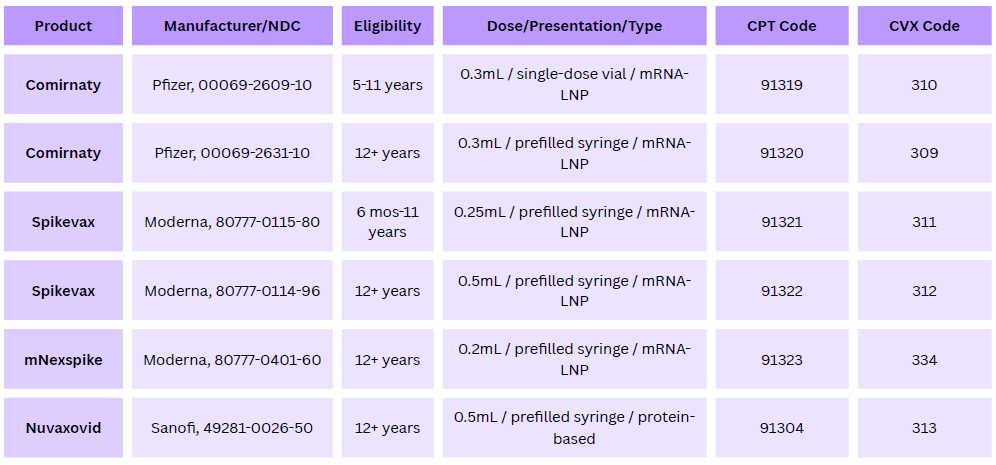
The following COVID-19 vaccine formulations are available for ordering through the VFC program:
RSV Immunization
- RSV antibody immunization continues to be recommended for all infants <8 months entering their first RSV season, ideally administered in the newborn nursery/NICU prior to discharge.
- This is for infants whose birthing parents did not receive RSV vaccine during pregnancy, at least 14 days prior to delivery.
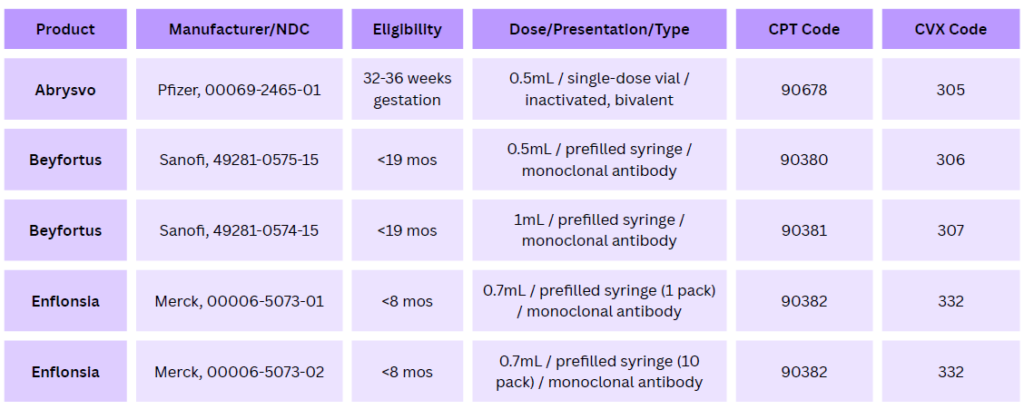
- Abrsyvo is available through the VFC program for pregnant people under age 19 years, with the current recommendation to administer the vaccine at 32-36 weeks of gestation between September and March (of note: this recommendation expands the previous September-January recommendation).
- RSV immunization is typically recommended from October to March. In 2025-2026, RSV season extended into April. The Philadelphia Department of Health will alert clinicians if RSV immunization needs to be extended past March.
- Infants and children 8 through 19 months of age at high risk of severe RSV disease entering their second RSV season should receive a second dose of RSV antibody.
- Note the following expanded high-risk criteria for this group:
- Preterm birth (<32 weeks’ gestation), regardless of the need for medication or other support
- Hemodynamically significant congenital heart disease
- Anatomic pulmonary abnormalities or neuromuscular disorders that increase the risk of severe RSV disease
- Down syndrome or other chromosomal differences that raise the risk of severe RSV disease
- Previous high-risk criteria still stand:
- Chronic lung disease that required medical intervention in the 6 months prior to the start of this season
- Severe immunocompromise
- American Indian or Alaska Native children
- Children with cystic fibrosis with severe lung disease or weight-for-length <10 %
- Note the following expanded high-risk criteria for this group:
The following RSV immunization formulations are available for ordering through the VFC program: